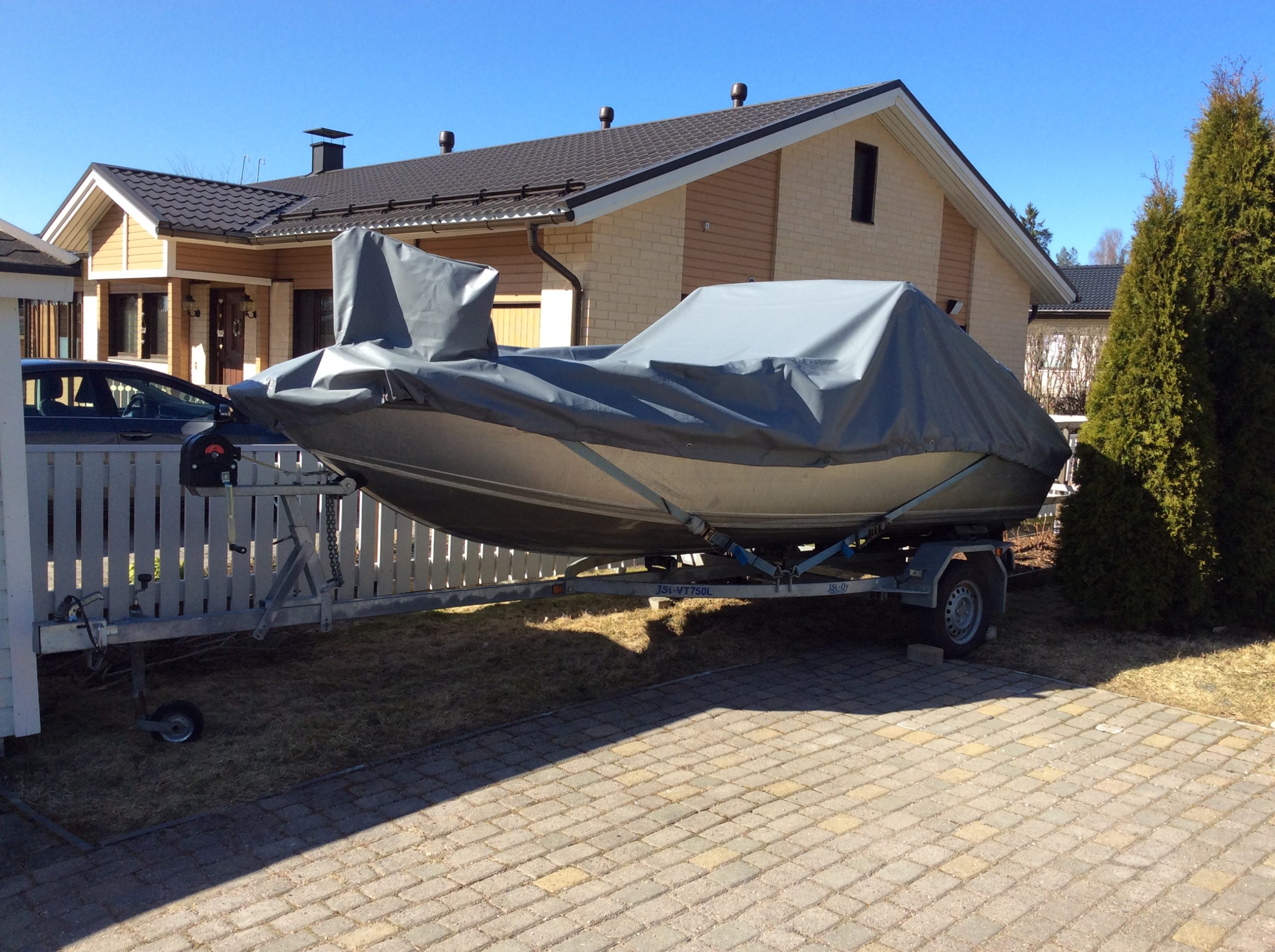
Most boat covers are made of one of three materials: PVC-coated fabric, polyester canvas or woven polyethylene. They look similar on a product page and behave very differently after a winter outdoors. This comparison sets out how they differ and where each one makes sense. We make our covers from 600 g/m² PVC, and we explain why below – but each material has a job it does well.
The three materials at a glance
| PVC-coated fabric | Polyester canvas | Polyethylene (PE) tarp | |
|---|---|---|---|
| What it is | Polyester base fabric coated on both sides with PVC | Woven polyester, usually with a water-repellent coating | Woven polyethylene strips, laminated |
| Typical weight | 500–900 g/m² | 200–350 g/m² | 80–250 g/m² |
| Waterproof | Fully | Water-repellent; needs re-proofing over time | When new; less as UV breaks it down |
| Breathes | No – needs ventilation openings | Partly | No |
| Seams | Welded | Sewn | Hemmed, eyelets in the hem |
| Snow load and wind | Strong; heavy enough not to flap | Good if well tensioned | Light; flaps and tears at the eyelets |
| UV | Good with UV-stabilised coating | Varies with fabric and coating | Weakest unless UV-stabilised |
| Price | Mid | Mid to high | Low |
| Best for | Winter storage outdoors | Mooring and summer covers | Short-term or temporary cover |
Weights and behaviour are typical ranges for each material; individual products vary.
PVC-coated fabric
PVC covers are a polyester base fabric sealed on both sides with a PVC coating. Because the coating is continuous and the seams can be welded rather than stitched, nothing passes through – not rain, not meltwater. The weight is an advantage outdoors: a 600 g/m² cover lies down on the boat instead of lifting in the wind, and it carries the weight of wet snow without stretching.
The trade-off is that PVC does not breathe. Moisture from the boat and the ground collects under the cover unless air can move through it, so a PVC cover needs ventilation openings. Ours have two mesh openings welded in; a PVC cover without them will grow mould over a winter.
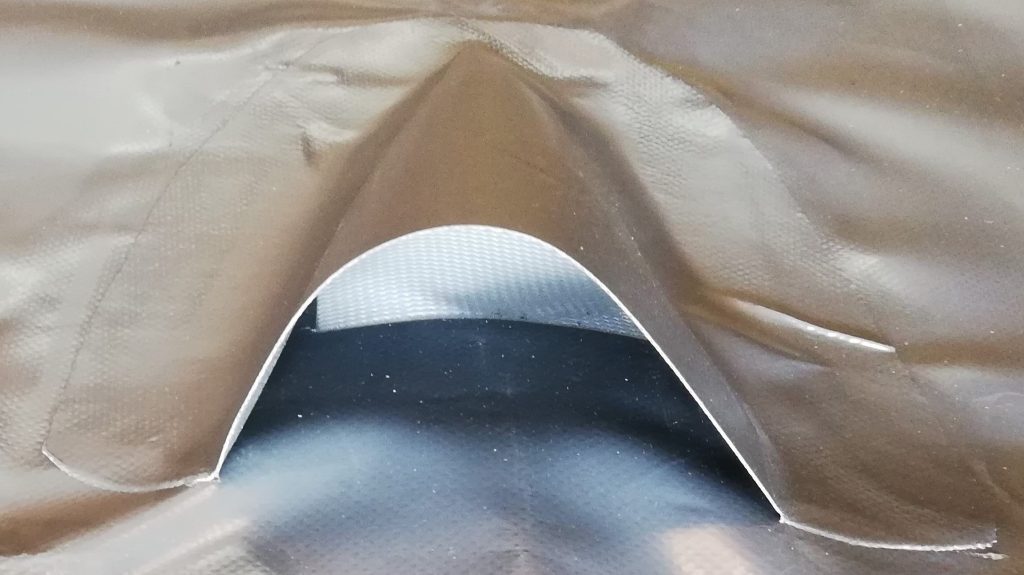
Our covers are made from 600 g/m² PVC that stays flexible below freezing and carries UV protection for the summer half of the year. With normal use we expect around five years of service.
Polyester canvas
Polyester canvas is lighter, softer and partly breathable, which is why it is the usual choice for covers that stay on a boat in the water through the summer or on a boat that is used every weekend. It folds small and looks tidy.
Its coating is water-repellent rather than waterproof, and the sewn seams are where water gets in first. Over time the coating wears and the fabric needs re-proofing. Under a winter of snow a lighter canvas also needs a good frame underneath, because it stretches where snow collects.
Polyethylene (PE) tarp
The blue or green tarp sold in hardware shops is woven polyethylene. It is cheap, light and waterproof when new, and for a few weeks of cover it does the job. Outdoors over a whole winter it is the weakest of the three: sunlight breaks the material down, it flaps in the wind, and the eyelets tear out of the hem. A tarp tied over a boat also has no shape, so it lies flat and collects snow and water.
Breathability vs ventilation
A material that breathes lets some moisture out through the fabric itself. A waterproof material does not, and has to rely on openings. Neither is automatically better: a breathable canvas still needs air to move under it in a damp autumn, and a waterproof PVC cover with good vents keeps the boat drier than a breathable one that leaks at the seams. What matters is that air can get in and out, and that the cover is shaped so water runs off – see our guide on how to cover a boat for winter.
Fitted vs loose
Material is half the answer; shape is the other half. A cover cut for one boat model sits down on the gunwale without folds and needs less tension to stay put, whichever material it is made of. A loose cover of the best fabric still collects water in its folds. Our boat covers are each cut for one model: find yours in our list of makes and models, and if it is not there, we make one to order – see our guide on how to measure your boat for what to send us.
Which one to choose
- The boat winters outdoors in the Nordics: PVC. Snow load, wind and five months of weather are what it is built for.
- The boat stays in the water through the summer and is used often: polyester canvas.
- You need cover for a few weeks: a polyethylene tarp will do – over a frame, so it does not lie flat.